


A Medical First at the CHU de Nice
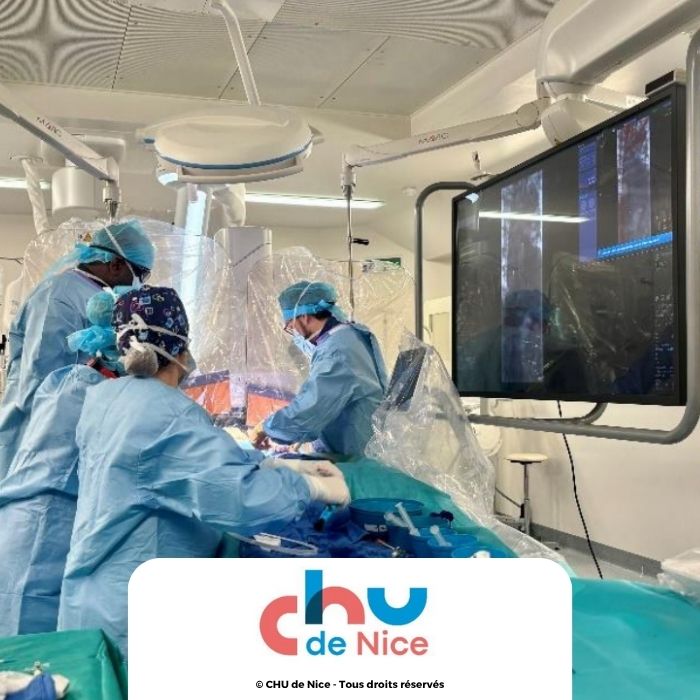
Nice University Hospital (CHU de Nice) has welcomed its first patient into the Allia IGS 7 hybrid operating room — a next-generation surgical space located at the Pasteur 2 hospital site. This cutting-edge room combines advanced imaging and robotics, providing a unique working environment for surgical teams.
A Strategic Investment of €2 Million
Fully funded by the CHU de Nice, the Allia IGS 7 room represents a €2 million (incl. VAT) investment. It is part of a broader innovation strategy aimed at improving the quality of care and ensuring greater surgical safety.
Tangible Benefits for Patients and Medical Teams
Procedures performed in this hybrid room involve incisions smaller than 5 mm, reduce the risk of complications, and often allow patients to return home within 24 hours. For medical teams, the room offers a smoother, more ergonomic and safer operating environment, with significantly reduced exposure to ionizing radiation.
The CHU de Nice recently carried out its first vascular surgery in this room — a successful thoracoabdominal aortic procedure — marking a major milestone in the ongoing Phase 2 development of the Pasteur 2 site.
This milestone marks a major step in Phase 2 of the Pasteur 2 site, reaffirming CHU de Nice’s commitment to providing the people of Nice and the wider region with high-quality care, in line with the stature of France’s fifth-largest city.
A State-of-the-Art Hybrid Operating Room
This latest-generation hybrid vascular surgery room includes a robotic C-arm with large-field digital angiography capabilities.
It was installed as part of the opening of the new Pasteur 2 Phase 2 operating block (P2P2).
The equipment represents an investment of 2 million euros including tax, fully funded by the CHU de Nice.
Thanks to this technology, teams can combine open surgery and endovascular procedures in the same space, with real-time 2D/3D imaging and navigation assisted by artificial intelligence.
The robot automatically positions the surgical C-arm according to the needs of the surgeon, ensuring unmatched precision and optimal safety.
Recognised expertise and a response to regional needs
The main indications concern arch, thoracic, abdominal and thoraco-abdominal aortic aneurysms; aortic dissections, limb revascularizations, carotid stents, dialysis access, and vascular emergencies.
The procedures involve vascular surgeons, anesthetist-intensivists, cardiologists, emergency physicians, and vascular physicians in a multidisciplinary dynamic that is one of the strengths of the CHU de Nice.
With 2,500 procedures per year, of which 40% are outpatient, the CHU de Nice is a regional and national reference center for vascular and endovascular surgery.
This hybrid room also strengthens the SOS-AORTE pathway, a system coordinated by the CHU de Nice for the rapid and secure treatment of aortic emergencies across the entire PACA-East region, including Haute-Corse and the far east of the Var department.
Immediate benefits for patients and teams
For patients, the benefits are considerable:
- less invasive procedures, often through incisions of less than 5 mm;
- enhanced safety thanks to real-time result control using the CBCT (Cone Beam CT) technique;
- shorter hospital stays, with a return home sometimes the same day or the day after.
For medical and paramedical teams, this hybrid room offers a smoother, more ergonomic and safer working environment. The leap forward in protecting teams and patients from ionizing radiation is immense. Teams now have a high-performance tool that facilitates coordination, improves visibility, and enhances peace of mind in the operating room.
“The Allia IGS 7 is more than just equipment: it’s a new way of practicing medicine. We are more precise, faster, and more attentive to our patients,” says Prof. Elixène Jean-Baptiste, Head of the Vascular and Endovascular Surgery Department at the CHU de Nice.
A forward-looking investment for a university hospital of excellence
This new equipment illustrates the investment strategy of the CHU de Nice, which continues to modernise its hospital infrastructure with a triple objective: innovation, quality of care, and team attractiveness.
It reflects a clear ambition: to offer all patients in the region cutting-edge medicine, in a human and compassionate environment, at the heart of a leading public university hospital.